

Keep a unit available to one buyer at a time
A visitor chooses a flat in the sales gallery while a channel partner is asking another executive about the same unit. One team consults last night's inventory sheet. The other checks the morning version. By the time accounts sees a deposit, two people may expect the developer to honour a reservation. The first design question for custom software development for property developers is who can change a unit's availability, and when everyone else can see that change.
A reservation record can carry its expiry, the team member who placed it, the applicable offer and the evidence needed to turn it into a booking. A central inventory view then reflects the reservation across the gallery and authorised partner desks. Dates and people remain attached when a hold expires, even if the unit goes back on sale. Start with that record before replacing the entire sales or finance stack.
Consolidate the sales and accounts handover
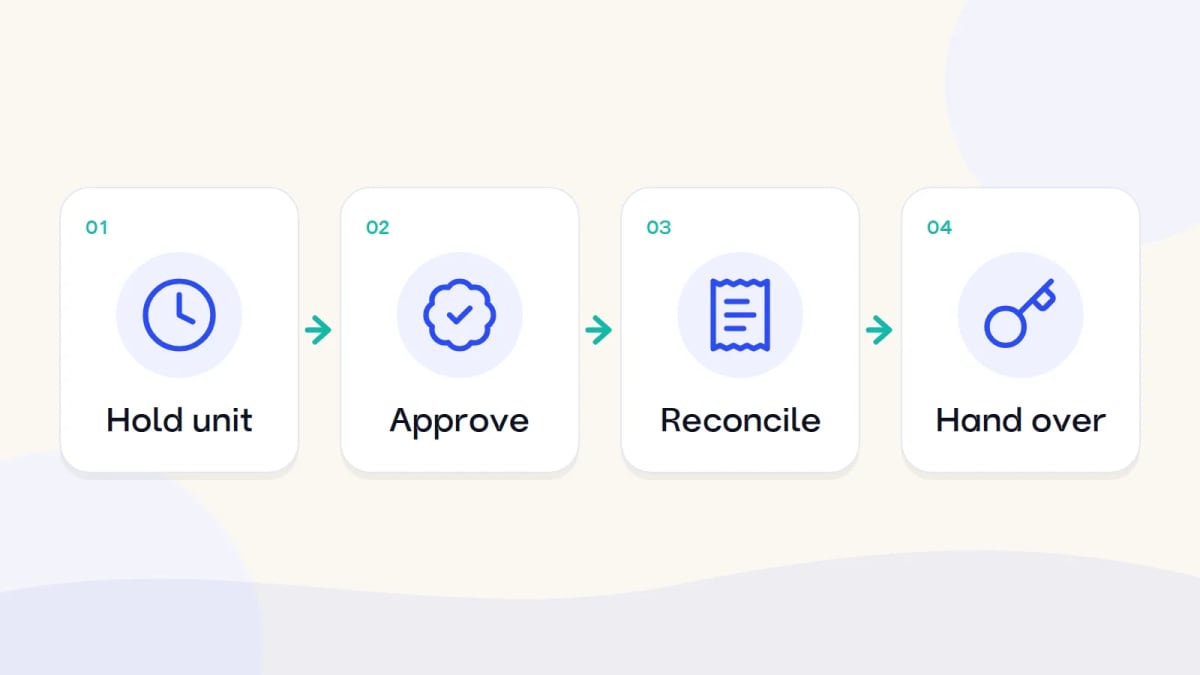
Model each project, phase, tower, floor and unit separately. A project manager can import the planned unit list and inspect exceptions before making the inventory visible. Sales can see current availability without seeing every buyer's file. Finance can reconcile a deposit against the booking it belongs to and leave an unmatched receipt in a queue instead of applying it to the first matching surname.
A temporary hold and a confirmed booking call for different authorisations. Make the hold expiry visible to sales and define who can extend it. Confirm a booking only when the required evidence arrives and the relevant person approves it. For cancellations, preserve the original booking with its payment references and record the reason, approval and date when the flat returns to available stock.
A partner registration needs a separate identifier. Two agents may submit different spellings for the same prospect, or one may register a couple while another registers one of them alone. Present potential matches for review and keep the history of whose submission arrived when. A human can settle the attribution under the developer's own policy.
Connect collections to construction and possession
A collection schedule starts from the terms recorded for a unit. If a demand follows a construction milestone, let the responsible team record the milestone and submit the proposed demand to finance. Preview the affected units, amounts and draft notices, and permit exclusions where somebody has a different agreement. Keep the approved schedule and subsequent revisions available for comparison.
For possessions, prepare a handover queue with the account status, documents to collect, an appointment window and the inspection owner. Categorise open snags by trade so a site lead can assign water pressure, paint or electrical work to the right team. A reopening should carry the reason and evidence so a contractor can distinguish a new complaint from the same unfinished repair.
Managers can review days spent in each stage by tower. Useful exceptions include holds expiring with unreviewed deposits, notices waiting for approval and units whose possession dates are approaching with inspections outstanding. Agree how each report handles cancelled or moved bookings before treating its totals as authoritative.
Work with the systems your teams already use
Our custom software development service can build a browser application in Next.js and TypeScript with Node.js APIs and PostgreSQL. If your accounts platform remains the ledger, identify which references the booking tool may read and which payment updates can return. A controlled export with reconciliation may serve as a first release while you confirm what the vendor exposes through its API.
Bring examples of previous unit identifiers, credit adjustments and amendments. A dry run compares imported totals by tower and booking stage, records duplicates, and lets teams check that historical documents still point to the intended unit. Give document links permission checks and ask each role to try opening a unit it should be unable to see.
During discovery we write acceptance scenarios for the changes that can cost the most time to unwind. In a prototype, two sales users can attempt to reserve the same apartment. The pilot can cover one tower with live staff and agreed steps for switching back if a ledger discrepancy surfaces. At rollout, hand over import instructions, permission setup and the checks finance performs at close.
Include a sample transfer between units in the pilot. Sales may need to release the original flat while finance is still reviewing how to allocate the deposit. Test who can see both records, how each unit's status changes and what prevents a duplicate credit. The history should make it possible to trace the original receipt after the transfer has closed.
Before rollout, have a sales coordinator and an accountant produce the same status report independently. Agree how to classify transfers that are awaiting approval and document who can correct a historical booking. That gives new project teams a procedure to follow when the original users move on.
Which module to build first, by project stage
| Where the project is | What usually goes wrong | First module worth building | What to check after a month |
|---|---|---|---|
| Pre-launch, unit list still changing | Price sheets and plans circulate in several versions | Unit master with approved price and plan versions | Every sales desk quotes from the same version |
| Launch and early bookings | Two teams promise the same flat; holds never expire | Reservation and hold register with expiry and approver | Holds that lapsed without a decision |
| Construction, demands raised by milestone | Notices go out late or to buyers on different terms | Milestone demand review with finance approval | Demands approved before the notice date |
| Possession | Handover dates slip because documents or snags are open | Handover queue with snag list by trade | Units ready on paper but blocked on site |
| Several live projects | Each project keeps its own spreadsheet rules | Shared unit, booking and receipt model across projects | Reports that match across project teams |
The table is a starting point for discovery, not a fixed sequence. A developer who already runs a sound accounts process may begin with possession, while a team preparing a new launch may only need the reservation register in the first release.
Buyer requests, documents and the record behind each reply
Buyers ask for the same handful of things through the project: a payment acknowledgement, a revised schedule after a transfer, a letter for their home-loan lender, a copy of the latest demand or a possession appointment. Each request can open a ticket against the unit and booking, so the person who answers sees the payment history and earlier correspondence before replying. Templates can draft the routine letters, with a named approver before anything leaves the office.
Keep each generated document as issued, with its date and the approver, rather than regenerating it later from data that may have changed. When a buyer disputes what they were told, the team can open the letter they actually received. Requests waiting beyond an agreed time can surface for the customer relations lead instead of being found during a complaint.
What decides the cost
The scope depends on how many projects and towers go into the first release, whether sales, finance and site teams all use it from the start, the number of approval steps for holds and bookings, partner registration rules, the demand and notice templates, how receipts are matched with your accounts platform, data migration from earlier projects, and the possession and snag workflow. We price from an agreed scope and acceptance scenarios rather than a per-user rate, and the quote lists what is in the first release and what waits for later.
Adjacent proof from enquiry and location workflows
The Grafftee is a recruitment platform with calendar-based demo booking. Cleanship is marine services work organised by service and port, with a quote form that collects a vessel's work window. These are adjacent examples of scheduling and structured intake. We have no public developer inventory case study. Ask us to demonstrate a competing hold and a cancellation using sample flat records before you judge fit.
Get a written quote
Share a redacted availability sheet from one tower, an example of an expired hold and a collection schedule with an amendment. We can use these to price a pilot with a 50% advance and milestone approvals for the reservation flow, finance handover and rollout. Message us on WhatsApp at +91 73482 28167 and you get a fixed written quote within one working day.
Case studies
Adjacent work · another industry
The Grafftee
Comprehensive HR & talent acquisition platform for India's leading recruitment and workforce solutions company.
Read the The Grafftee case studyAdjacent work · another industry
Cleanship
Marine cleaning company registered in Ajman Free Zone — a Next.js site with a landing page for every service at every port it covers across the UAE, India, the Gulf and West Africa.
Read the Cleanship case study
Frequently asked questions
Can we keep the website we already have?
Yes. A public project site can show approved floor plans and route enquiries while staff use a separate workspace for availability and reservations. Decide whether the site may publish availability or should invite a buyer to confirm a specific unit with sales. The latter keeps commitments under the team's control.
Which parts should we build first?
Pick the handover that repeatedly creates disputes. If two people are holding the same flat, build inventory and reservation control first. If sales and finance cannot match booking references, start with that reconciliation. Choose a pilot project where the relevant team can check every changed record.
How do we price the scope of a property system?
We assess the number of roles, sources of inventory, migration quality and approval rules. Importing a clean tower schedule into one workspace is a different job from reconciling financial histories across several completed developments. Read and write access to an existing platform affects the integration scope.
Can a channel partner see all our stock?
You can share whichever project and unit fields suit the relationship. A partner might see the availability of selected units and the status of their own registrations. Internal comments, buyer details and ledger entries can stay restricted to the teams working with those records.
How do we handle two payments against an expired hold?
Put the receipts in an exception queue with their timestamps and original references. A finance user checks who paid and when, and sales applies the developer's decision. The system should preserve both the expired and any subsequent hold so the team can reconstruct the sequence.
Can existing spreadsheets be imported?
Yes, once someone maps the columns and identifies the authoritative version. Include a sample with parking, merged units and amended payment schedules if those appear in your projects. Review rejects and spot-check duplicates before opening the new workspace to every sales desk.
Does the software define the buyer documents we need?
Your project and legal teams supply the document checklist and approve the wording and release rules. We can put their approved process into the product and keep a record of which version each buyer received. Have them review the first pilot before issuing anything to customers.