

Which register fits your commercial desk
| Contractor type | What the commercial manager checks first | Modules to start with |
|---|---|---|
| Main contractor on lump-sum jobs | Is every client instruction priced and approved before work proceeds? | Variation register, approval steps by value band |
| Subcontractor to larger contractors | Have our claims for extra work been submitted and acknowledged? | Instruction log, claims with evidence, status per main contractor |
| Contractor with many small jobs | Which jobs are over their committed cost? | Job list, commitments per package, cost-to-date view |
| Firm with heavy subcontracting | What have we ordered from each subcontractor and what is still due? | Subcontract orders, applications, retention tracking |
| Government works contractor | Can we produce the paper trail an auditor asks for? | Document links per change, approval history, exports |
Start with the register that loses you money when it is late. In most firms that is the variation register.
Follow one variation from instruction to close
Consider a fit-out project where a client asks the site team to change the finish in several rooms. The first record should identify who raised the change, the affected rooms, the available evidence and the person responsible for checking the scope. The project manager can then decide whether the request needs clarification, can be referred for pricing or should be closed with a reason.
An estimator can prepare a revision against a drawing and a measured scope. If the work changes again, the software can retain the version sent to the client and show which version the team is currently preparing. It should also distinguish between an internal recommendation, a submitted variation and documented acceptance. That distinction matters when the commercial team prepares a valuation or explains why an instruction is still outstanding.
A useful register answers questions such as which work packages have instructions without quantities, which submitted changes are awaiting a response and which works proceeded with management approval before final agreement. We agree the records that establish each status. For example, a user may have to attach a confirmation or record where it is held before marking the change accepted.
Make commitments and costs visible by package
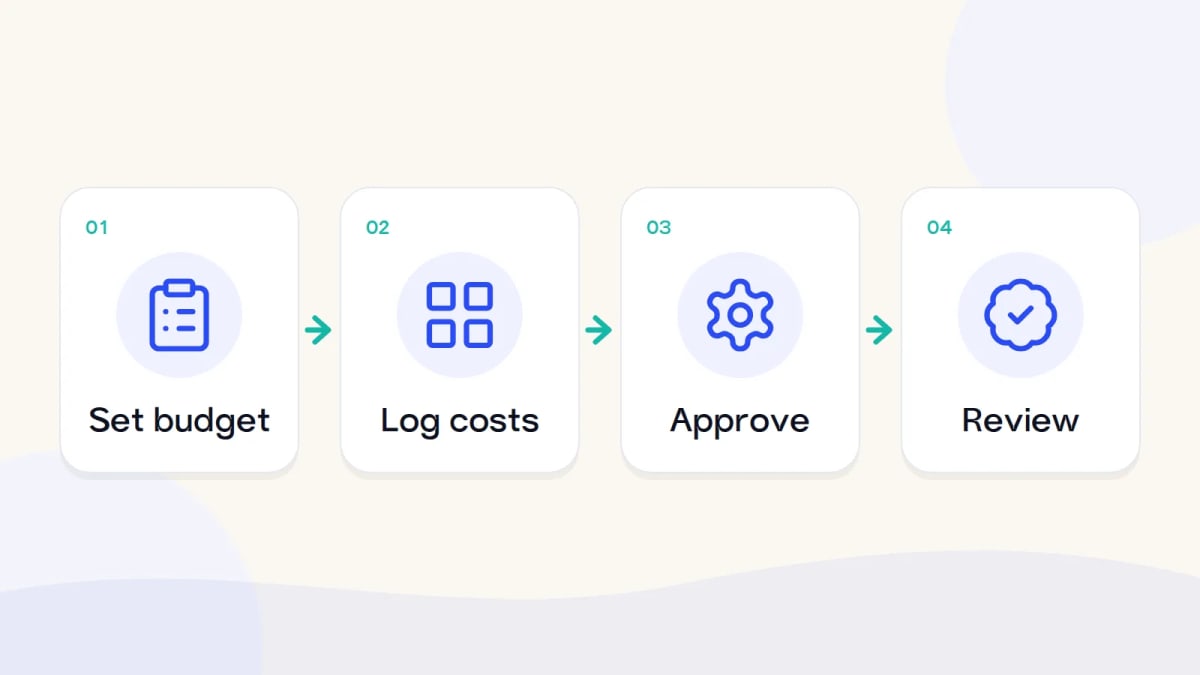
A purchase requisition can carry a job, cost code, quantity and required date. The reviewer can see who asked, whether the item is within the agreed scope and whether it overlaps with an existing order. Finance may still issue the purchase order in an existing system. In that case the workflow can link to the issued record and hold the approval history so neither team has to maintain the same commitment twice.
For subcontract work, keep the agreed scope separate from measured progress and supporting evidence. When a reviewer changes a submitted quantity, record the reason and leave the original application available for comparison. The software can surface the change for the next reviewer and show what has already been certified. The specific calculations and approval responsibilities come from your process and sample documents.
Managers can view original budget, approved changes, committed amounts and posted costs side by side if the source data supports it. Each column should identify when its data was last refreshed. A requisition may inform a forecast while an authorised order belongs in committed costs. Agree that distinction with finance so a dashboard can be reconciled before it is used for decisions.
Decide what remains in existing tools
Keep the project document system as the source for drawings if your team already controls revisions there. A variation can store the drawing reference and version used in the estimate, plus a link to the controlled copy. For accounts, we can assess a supported integration or a scheduled import. Every transfer needs a stable job identifier, checks for duplicate records and an owner to review rejected rows.
We work through access for project managers, surveyors, procurement, finance and any external parties invited to a portal. A subcontractor might see their own packages, attachments and instructions. A commercial manager may need visibility across jobs but only some people should change approval limits. We can document role rules before building screens and include rejected access scenarios in testing.
How we build and hand over
Bring an approved change, a disputed one and a job where the same commercial commitment was logged twice. We map what each person did and agree what should happen next in each case. A browser-based system can use Next.js with TypeScript, a Node.js API and PostgreSQL as described in our custom software development service. The final choice depends on your existing systems and hosting requirements.
We review a working prototype with the commercial desk, build the agreed transitions and rehearse import and export with sample records. A pilot project gives you a controlled way to compare the register with the documents finance already has. Handover can include role administration, an agreed export and a walkthrough of how to close out a project. For site capture on phones, see Android app development for construction contractors. For tender and capability material, see construction contractor website development and the construction industry page.
Reconcile commitments before the monthly cost review
Give the project accountant a way to trace a cost code from the estimate through a purchase order, accepted quantity and approved invoice. When a supplier bills against several deliveries, show the matching receipt lines and any quantity still under dispute. Keep the committed amount visible until the order is closed, even if one invoice has already been posted. Before rolling the workflow out, test an amended order and an invoice split across two sites so the finance team can confirm that project totals and outstanding commitments reconcile.
What decides the cost
The main factors are the number of registers and approval steps, the roles and value bands that control approvals, the number of live projects and users, importing your existing registers, the exports and reports finance needs, and whether the tool connects to your accounting package or project system. We map one real variation and one subcontract order before quoting, and we do not publish prices.
Relevant project experience
We have no direct construction workflow case study to show. In the adjacent workflow example of MariBiz.ai, a maritime procurement marketplace, the structured request for quote records the service, location, timing and scope in one place for suppliers reviewing the opportunity. Construction variations are a separate workflow. The relevant design lesson is to preserve a common scope reference while allowing responses and revisions to develop independently.
For adjacent sector experience, HCB Engineering is our WordPress site for an electrical contractor. Its project gallery and service-specific enquiry forms are examples of organising contractor information for a public audience. A commercial register has a different audience and must be tested against the private documents, authority rules and job codes your staff use to approve changes.
At pilot close, ask a surveyor to reconstruct the history of one disputed change from the register alone. They should be able to find the original instruction, the estimate that went out and the evidence behind the final status without asking the site team to resend anything.
Get a written quote
Share your variation register, approval route and an example of a commitment that is difficult to reconcile. We will use those to scope one commercial workflow and identify the inputs it needs from accounts. Work starts with a 50% advance and progresses through milestone approvals for the workflow and pilot. Message us on WhatsApp at +91 73482 28167 and you get a fixed written quote within one working day.
Case studies
Adjacent work · another industry
MariBiz.ai
Global marine procurement marketplace connecting 3,226+ vendors with shipowners across 121 service categories.
Read the MariBiz.ai case studyAdjacent work · another industry
HCB Engineering
Professional website for a government-licensed electrical contracting company with 20+ years of experience.
Read the HCB Engineering case study
Frequently asked questions
Can this work alongside our accounting package?
Yes, subject to the access available. We decide which application issues orders, where job codes originate and whether the transfer should be an API connection or an export your accounts team reviews.
Can you import our existing variation register?
We can inspect a sample and map the columns to the new workflow. Missing references and conflicting statuses can be flagged for manual review. Decide which historic attachments should move and who signs off on the imported totals.
Can approvals depend on the job or value band?
Yes. Each rule can be tied to the project, transaction type and role. We also agree what happens if a project manager is away or a request changes after approval.
How do we handle instructions given on site?
We can record who passed on the instruction, when it happened and what evidence exists. A separate review step lets the commercial team decide how to treat it before it appears as an accepted change.
Can subcontractors submit their own applications?
That can be part of a scoped portal. Submissions can include quantities, references and supporting records. The review screen can retain their original submission while recording any correction made by the reviewer.
Should we replace our project management system?
Start by identifying the decisions that system already handles well. If the gap is limited to commitments and variations, an integration or a small parallel workflow may be enough. A replacement scope makes sense when several dependent processes need to move together.