

Which app fits your craft business
| Business type | What the person paying for the app checks first | Features to start with |
|---|---|---|
| Brand working with artisan clusters | Can a coordinator record progress on each order in the field? | Orders per maker, work-in-progress photos, delay reasons, offline sync |
| Cooperative or NGO selling for members | Can we see each member's work and what they are owed? | Member profiles, pieces received, quality notes, payment records |
| Studio or artist taking commissions | Can the client approve stages without long chats? | Commission stages, client approval on photos, delivery date |
| Exporter or wholesaler at fairs | Does the catalogue work offline and capture orders? | Offline catalogue, buyer details, order sheet sent to the office |
| Brand with repeat retail buyers | Will buyers reorder from the app rather than a message? | Reorder lists, new-collection notifications, order history |
Start with one row. A brand that tries to build the maker tracking, the fair catalogue and the buyer app in one release usually ends up with three half-finished tools.
Track work with the makers
Orders split by maker and piece. A brand order for a collection becomes a line for each artisan or workshop, with the design reference, quantity, material issued and expected date. The coordinator sees only the makers they look after.
Work-in-progress photographs. Each visit adds dated photos to the right order line. A product manager in the city can compare a piece against the approved sample before it is finished, when a correction is still cheap.
Delay reasons in the coordinator's words. Weather for drying, a festival week, a material shortage or a maker's illness are real reasons. A short pick-list plus a note keeps the record honest and shows patterns across a season.
Quality notes at receipt. When pieces arrive, the receiving team records what was accepted, what needs rework and why, with photographs. That record is what makes a fair conversation with the maker possible.
Selling at fairs and to trade buyers
Exhibition halls are notorious for weak signal. The catalogue, images, sizes and finishes are stored on the device, so the sales lead can browse and filter without a connection. A buyer's selection is captured as an order sheet with their details and sent to the office when the device reconnects. The app records which items each buyer looked at, which helps the follow-up after the fair.
Commissions and one-of-a-kind work
For an artist or a small studio, the app can hold each commission as a set of stages: brief, sketch, colour approval, finishing and dispatch. The client receives a photograph at each stage and approves it in the app, so the approval is on record rather than in a chat. Because many pieces are unique, the app shows a piece as reserved or sold as soon as it is committed, so the same work is not offered twice.
Working with makers' phones and language
Artisans and coordinators may use entry-level Android phones or share a device. We keep screens short with large buttons and photographs doing most of the work. If makers and coordinators need different interface languages, include those needs in the written scope. Images are compressed before upload so a coordinator is not stopped by a slow connection, and the app shows clearly which records are still waiting to sync.
What decides the cost
We quote after seeing how your orders move today. The main factors are the number of roles (coordinator, maker, buyer, office), how much must work offline, whether makers use the app themselves or a coordinator records for them, the number of languages, how photographs are stored and reviewed, whether payments to makers are recorded or only tracked, and whether the app connects to your store or accounting software. We do not publish prices.
How we build it
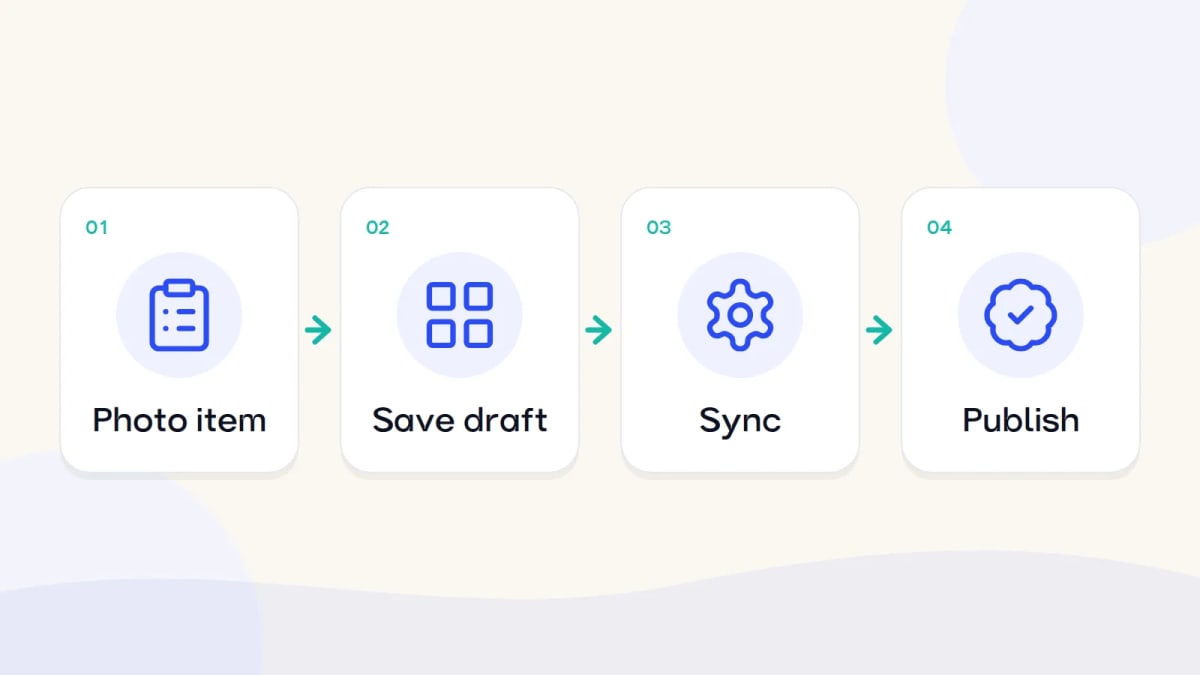
- Map a real order. We follow one collection from design reference to delivery and note every message and photo exchanged.
- Prototype. A coordinator and a product manager tap through clickable screens before any code is written.
- Build in short cycles. Native Android in Kotlin with Jetpack Compose, Room for offline records, and an API with an office screen for review. You get a test build every one or two weeks.
- Field pilot. One cluster or one fair uses the app on live work; we fix what slows them down.
- Release. Through your Google Play developer account, or distributed privately to staff devices.
We work in milestones you approve, with a 50% advance to start. See our Android app development service for the full delivery scope.
Proof: closest real work (adjacent)
We have no app case study, and none in handicrafts. The nearest projects are websites, labelled adjacent.
SIDCO (adjacent: an outreach website). We built the site for a council that connects small-scale industry workers to central government schemes and free skills training in sewing, embroidery, weaving and painting, with a single application form capturing district and state. Read the case study.
Kalamohini by Aditya (adjacent: an artisan fashion store). A WooCommerce store for hand-crafted tissue-silk sets with mirror work, where product pages carry multiple angles and craft-process descriptions. Read the case study.
ClickNGreet (adjacent: a gift store). A WooCommerce store with 20+ categories including resin art, with bulk order management and WhatsApp support. Read the case study.
Get a written quote
Send us one recent order from design reference to delivery, with the photos and messages it took, and we will show where an app removes the chasing. Message us on WhatsApp at +91 73482 28167 and you get a fixed written quote within one working day.
Case studies
Adjacent work · another industry
SIDCO — Small Industries Development Council Organization
Outreach and application platform connecting small-scale industry workers to PMEGP government schemes, free skills training and welfare support.
Read the SIDCO — Small Industries Development Council Organization case studyAdjacent work · another industry
Kalamohini by Aditya
Hand-crafted tissue-silk sets with intricate mirror-work — premium artisan ethnic wear store.
Read the Kalamohini by Aditya case studyAdjacent work · another industry
ClickNGreet
Personalized gift shop and marketplace with 20+ product categories and pan-India shipping.
Read the ClickNGreet case study
Frequently asked questions
Do artisans need to use the app themselves?
No. Many brands start with coordinators recording progress for the makers they visit. Makers can be added later if they want their own login.
Can the app work without internet in a village or a fair hall?
Yes. Orders, catalogues and forms are stored on the phone, and new records sync when the connection returns.
Is an app better than a website for selling handicrafts?
For selling to new buyers, start with a website or an online store. An app pays off for repeat trade buyers and for the team that makes and delivers the work.
Can buyers place orders through the app?
Yes, for trade buyers with a login. Retail sales usually work better through an ecommerce store for handicrafts and art.
Can it record payments to makers?
It can record what was agreed, what was received and what was paid. Actual payments stay in your bank or accounting system unless we scope an integration.
Is it available for iPhone?
This service covers native Android. Tell us during discovery and we will explain the options for iOS.
How long does a first version take?
It depends on the roles and offline needs. We give a milestone plan with the written quote.