
Comparison · CMS · 2026
Payload vs Strapi: which open-source CMS should you choose?
Choose Payload if your site is built on Next.js and you want the CMS and website in one TypeScript codebase. Choose Strapi if you want a separate content backend that can feed several front ends, or a managed cloud plan from the vendor.
Both are MIT-licensed, so the software itself is free to self-host. Your real cost is hosting, upkeep or a paid cloud plan. Details come from each project's documentation and pricing page, checked on 2 November 2026.
Published · Updated · Get a written quote
Payload and Strapi side by side
The main difference is where the CMS lives.
| Payload | Strapi | |
|---|---|---|
| Licence | MIT | MIT |
| Where it runs | Inside a new or existing Next.js app | As its own application, self-hosted or on Strapi Cloud |
| APIs | REST, GraphQL and direct database access in Node.js | REST and GraphQL |
| Databases named in its docs | MongoDB and Postgres | Check its docs for your setup |
| Best fit | One Next.js codebase | One backend for several front ends |
What Strapi Cloud costs
Self-hosting avoids these fees, but you then run the servers, backups and updates yourself. On Strapi Cloud, the Starter plan has no backups and sleeps when idle, so most live business sites should look at Pro or above.
| Plan | Price | API requests | Backups |
|---|---|---|---|
| Starter | $35 | 100k | None |
| Pro | $90 | 1M | Weekly |
| Business | $450 | 10M | Daily |
Ownership to consider
Payload was acquired by Figma in June 2025. Its core code remains MIT-licensed, so check its roadmap and enterprise features if a long-term plan depends on them.
The admin panel and day-to-day editing
Payload generates its admin panel from your TypeScript config. Collections, fields, validation and hooks are all code, so the editing interface always matches the data model, and any part of the admin can be replaced with your own React components. Since version 3, the admin runs inside the Next.js App Router alongside your site.
Strapi's admin is a separate React application. Content types are created with the Content-Type Builder, which is available in development mode and writes the schema to files you commit, so changes still go through your normal release process. Plugins extend both the admin and the API.
For editors, both feel like a modern CMS: lists, forms, drafts, media library and roles. The difference is mostly felt by developers, in where the configuration lives and how it is deployed.
Hosting, media and upgrades
Payload deploys with your Next.js app, so it can run wherever that app runs, including serverless platforms. Serverless file systems are temporary, so media uploads go to cloud storage through one of Payload's storage adapters, and the database is a hosted Postgres or MongoDB.
Strapi needs a long-running Node.js server and a database. Its documentation lists PostgreSQL, MySQL, MariaDB and SQLite, with SQLite meant for development. Media uploads also need an upload provider for cloud storage in production. Strapi Cloud handles all of this for a monthly fee if you'd rather not run it.
Major versions of both have required real migration work: Strapi 4 to 5, and Payload 2 to 3 when it moved into Next.js. Pin your versions, upgrade on a staging copy first, and budget time for each major release.
Access control
Payload defines access control as functions in the config, per collection and per field, so rules such as "editors can only see their own region's posts" are ordinary code with tests. Strapi manages roles and permissions in its admin panel, for both admin users and API consumers, which is quicker to set up for standard cases and needs custom code only for unusual ones.
Questions to answer before you choose
Is the website the only consumer of the content, or will an app and other sites use it too? Does your team want the CMS in the same codebase as the site, or kept apart? Who will run the servers and upgrades: your developers, or a paid cloud plan? Answer those three and the choice is usually made.
Our recommendation
For a new Next.js site with developers in charge, start with Payload. One codebase means one deployment and fewer moving parts.
Choose Strapi when a mobile app or several websites need the same content, or when your team wants the CMS kept apart from the front end.
Next.js builds of ours

NEXTmentor
A Next.js course platform with payments, verifiable certificates and referral commission.
Read the NEXTmentor case study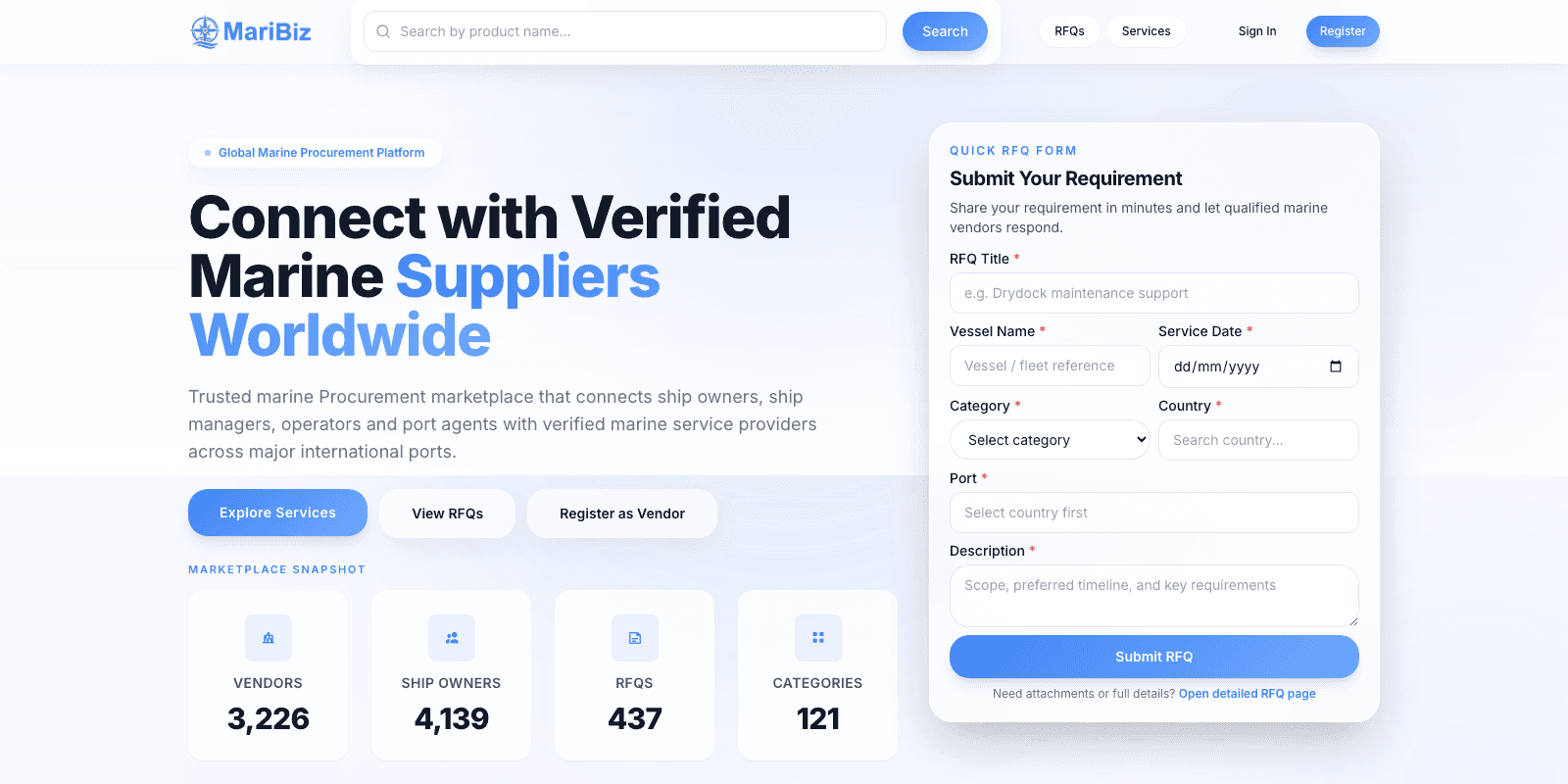
MariBiz.ai
A global marine procurement marketplace with an RFQ engine and 3,226+ vendors.
Read the MariBiz.ai case studyFrequently asked questions
- Is Payload better than Strapi?
- For a project built entirely on Next.js, Payload is usually the simpler fit. Strapi is often better when several front ends share one content backend.
- Are Payload and Strapi free?
- Both are MIT-licensed and free to self-host, though you still pay for hosting. Paid offerings and enterprise features are separate.
- Does Payload need a separate server?
- No. Payload installs inside your Next.js app, so the CMS and website can be deployed together.
- Can Payload run on Vercel?
- Yes. It deploys with your Next.js app. Use a hosted database and a storage adapter for media uploads, because serverless file systems don't keep files.
- Which databases does Strapi support?
- Strapi's documentation lists PostgreSQL, MySQL, MariaDB and SQLite, with SQLite intended for development rather than production.
Let's discuss your next project
We're here to listen. Book a meeting with our team to discuss your vision, explore possibilities, and start creating something.