

What your visitors need from the site
Website development for food processing should help distributors and procurement teams qualify a product before an enquiry. Food processors often sell several ways: bulk supply, distributor packs and products manufactured to a customer's brief. A prospective buyer wants to establish whether a plant can make the format they need before starting procurement. Give each audience a route to the capabilities, specifications and contact that apply to its order.
Standardise the fields that distinguish product lines: format, pack types, storage conditions, markets served and the versions of any published specification. Let the authorised quality owner decide what information can be shared publicly and what procurement needs to request. Make it possible to replace an out-of-date sheet in one place and identify where it was linked.
A private-label enquiry should allow someone to say they have a reference product, no fixed packaging yet or a particular delivery market. Ask enough to put the brief in front of the right commercial team. If the buyer has a recipe or a detailed supplier document, explain how the business will arrange a more appropriate follow-up channel.
Compare the main visitor routes
| Visitor or stage | What the website provides | Acceptance check |
|---|---|---|
| Bulk buyer | View product family and supported formats | Unit, format and document labels agree across pages |
| Private-label buyer | Outline product, pack and intended channel | Form can be submitted when some specification details remain open |
| Distributor | Locate regional representative or enquiry route | An unsupported territory receives a clear contact option |
Make a useful catalogue before adding a buyer portal
Start by reviewing one staple line, one custom item and one product with several pack formats. If their records differ, work with sales and quality to choose which fields are mandatory. A structured record may keep pack format and intended market beside the right commercial contact. The public site can publish the information people need to decide whether to call, with detailed requests handled by staff. Where a pack is being phased out, show an approved alternative when one exists. Give the catalogue owner a way to record a withdrawal without losing track of links already emailed to buyers.
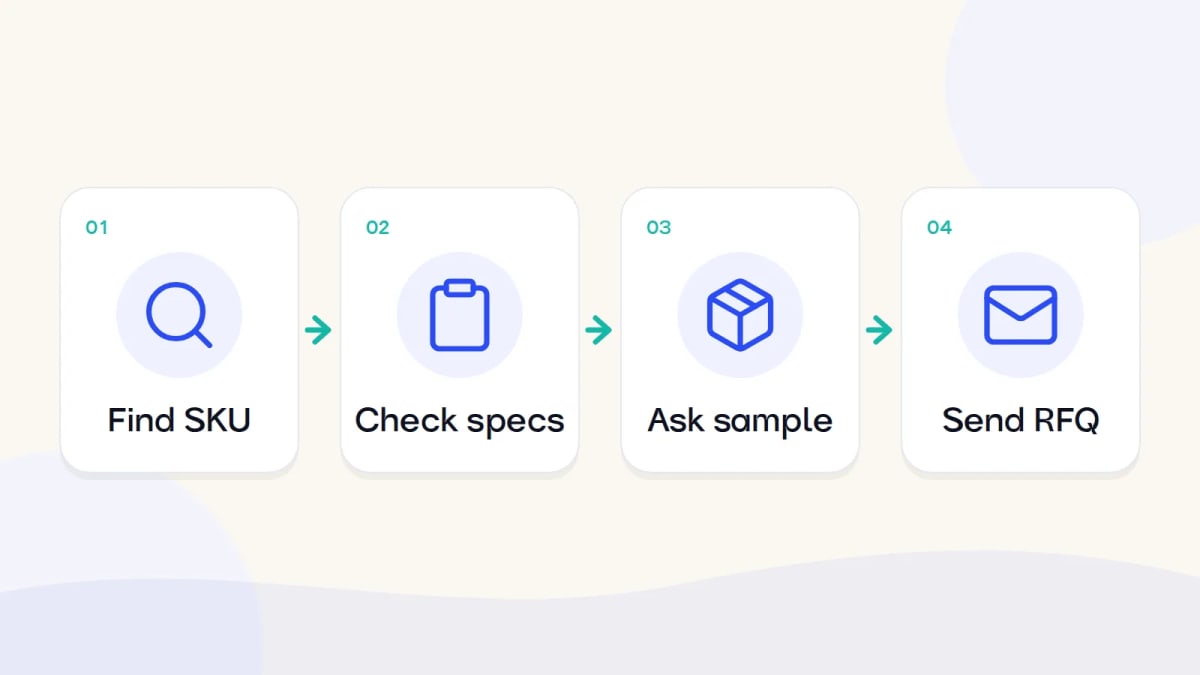
Keep quality documents attached to the correct product
A content review should include actual examples of specifications and the names people use when talking about them. Show the date and use a single accepted source for the published document. Format differences matter: a sheet appropriate for a bulk ingredient does not necessarily describe a retail pack that uses it. Check whether buyers reach the download from another product page or an old search result. Decide how much supporting information remains visible when a file is removed, and make it easy to get an updated copy from the right commercial or quality contact.
Write separate conversations for different buyers
One buyer may need a regular bulk format delivered through a distributor. Another may be evaluating a private-label test run. Cross-check each landing page and form with a person who receives those requests. Agree what at first looks useful but can wait for follow-up, such as exact artwork or a recipe. Make it clear where a visitor should start if they are still evaluating pack options. Set specimen enquiry records in staging and have the sales team identify who would handle each request. The exercise often reveals labels that work internally but confuse someone outside the company.
Get product and plant owners into the review
WordPress can suit a content-led launch when nominated staff manage product entries. We would review a product, a capability page and a buyer enquiry before loading all records. At that milestone, the plant and quality teams can check what claims the templates invite editors to make. Then we test redirects from existing product documents, phone layouts and enquiry delivery as part of the website development service. Verify that the contact output is useful when a buyer hasn't finalised a quantity. Agree a publication process for seasonal products and territory changes so enquiries stay actionable after launch.
Decide which details travel with a sample request
Imagine a buyer who wants to compare two formulations for a new line and has yet to finalise packaging. Let them indicate what they know and what they are still evaluating. The next step may be a discussion with a sales or technical contact rather than a standard request. Show which statements describe typical options and which need the company to confirm feasibility. Keep prototype recipes and artwork out of a general web enquiry unless the approved workflow calls for those files. Test whether the team receives the originating product or capability context and can make a useful follow-up.
Design for multiple units and markets
Catalogue records may describe individual units, cartons or formats handled in bulk. Use labels that a buyer from outside the company understands and distinguish which units apply to which channel. If a product is only available in certain markets, show approved availability where it informs a buying decision. Ask the sales team how they treat a buyer outside the indicated territory and route them accordingly. When preparing the migration, review documents and catalogue fields together. A clear product card can still mislead if the attached file describes a different pack format or an outdated version.
Decide what the site can do without a connection
If the company uses another system for product records or distributor management, specify what public content the website gets from it and what stays under salesperson control. A manually curated catalogue can work when the release cycle is slow and the editor has an explicit responsibility. A feed can make sense when approved records change frequently and have a stable format. Agree how missing values behave before deciding to connect it. Test an item with no public document, a limited-territory record and a withdrawn file so procurement still gets an accurate explanation.
Before the site goes live
Test a specification replacement, a pack that is distributed in only one market and a buyer asking to send a confidential recipe. Ask commercial and quality staff to agree which notices are appropriate beside downloadable files. Review whether links shared in email still carry visitors to an approved current version or explanatory page.
What decides the cost
The work grows with catalogue variants, approved document migration, language and market versions, and matching requests to the right commercial contact. Project scope also depends on how current product records are.
A basic capability website and a maintained product library represent different editorial workloads. If you need to publish specification downloads, decide who will maintain their revisions and how the website associates each one with the right product record and market. Review one group with several pack sizes before promising a bulk import. A small number of incomplete products can consume more time than a larger group whose records are consistent.
A contact-only project might send RFQs directly to sales. A broader build could connect the form to a CRM and preserve the product family, buyer type and territory that prompted the request. Specify how the system treats duplicate enquiries and which desk handles an unassigned market. If buyers are expected to send non-public material, agree how the company arranges that first. Keep the public content brief distinct from building private document access.
Language and regional variants also affect what needs review. A translated pack page should use approved terms for its market, and relevant supporting documents should match them. Give somebody responsibility for updating the language versions if a specific product is withdrawn. Once the commercial team sees this in one sample page, it can decide where separate versions earn their keep and where a single approved reference is easier to maintain.
We start on a 50% advance after agreeing the scope. Include a milestone at which quality and sales can approve the product and document templates together.
Adjacent proof from our work
Krushi Doctor is an adjacent example. The agricultural catalogue groups products and offers downloadable guides and a contact route. For a food processor, the related pattern is pairing organised categories with useful, controlled product documents.
Request a quote
Send one bulk catalogue sheet, one private-label brief and one example of an enquiry your team had to redirect. We can use those to define the site and the lead handoff. Message us on WhatsApp at +91 73482 28167 and you get a fixed written quote within one working day.
Case studies
Adjacent work · another industry
Krushi Doctor
Agricultural guidance platform serving 1.2 lakh+ farmers with 100+ products and crop PDF guides.
Read the Krushi Doctor case study
Frequently asked questions
Can we publish technical specification sheets?
Yes, with owner approval and review dates. Agree which documents are public and which an account manager should provide after an initial conversation.
Can the public site explain private-label services?
Yes. Explain which product categories, pack types and brief stages the team accepts, and what information is needed to review a request.
Do export customers need separate pages?
Consider separate pages when the contact, service, pack options or documents differ. Get each market's claims reviewed before publication.
Can enquiry forms take buyer attachments?
An initial brief may work without attachments. If upload is essential, agree permitted formats, handling, access and the deletion process first.
What belongs on the plant capability page?
Publish verified process descriptions, facilities and formats relevant to prospective buyers. Avoid capacity numbers or certifications unless approved for publication.
How will we manage discontinued packs?
Agree who withdraws the catalogue record and what happens to its old links. Point to a replacement only where the commercial team confirms it is equivalent.
Should distributor and retail enquiries use one form?
Route by what a visitor is trying to do. If contacts are different, ask the few fields each team can use and give visitors a route for general questions.
How do you design a website for a food processor?
Start with the product records buyers ask for, which specifications sales can publish and where each sample or quote request should go. Test a few representative products before migrating the full catalogue.