

What your visitors need from the site
Website development for fintech needs a clear handoff from public product information to the provider’s approved application flow. A fintech product can be understandable to a product team and still be opaque to a finance lead checking a vendor. Start with who can use the product, what it does, which party performs each step and where support starts. If buyers discover the product through an integration partner, the page still needs to explain the service in its own right.
Give each product its own approved explanation of eligibility, prerequisites and handoff. A merchant payments page can explain onboarding steps while a reconciliation product page shows the inputs an operations team supplies. If examples are illustrative, label them. Publish claims about permissions, coverage or provider relationships only after the company has approved the exact language and evidence.
Keep the website separate from the authenticated product and any identity verification workflow. Give visitors distinct paths to request a demo, sign in and ask for help. Account recovery belongs with the authorised system. A marketing form can ask about the business and product interest with an explicit note about what documents should never be sent through it.
Compare the main visitor routes
| Visitor or stage | What the website provides | Acceptance check |
|---|---|---|
| Evaluator | Read the product scope and integration prerequisites | Product wording matches the service the company actually offers |
| Developer | Find versioned documentation or an approved sandbox | Sample material contains no production keys or real identifiers |
| Existing customer | Go to product access or support | The sign-in destination stays distinct from the sales funnel |
Explain who does what at the handoff
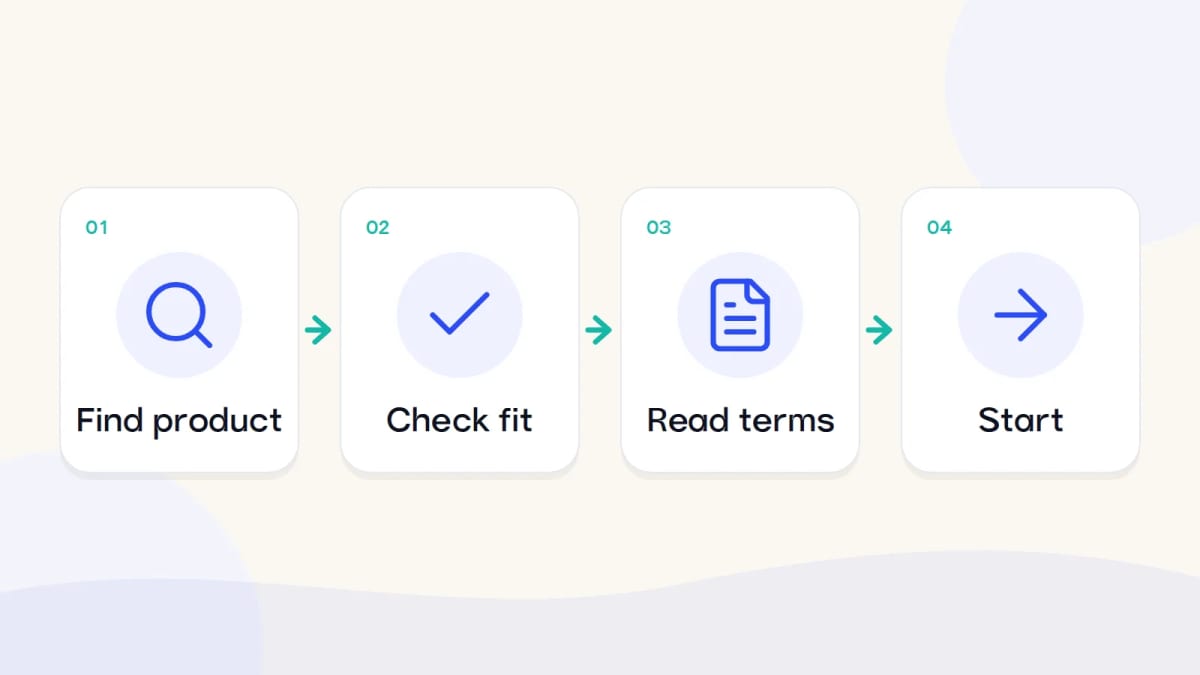
A prospect should understand when they are dealing with your company and when an external provider takes over. Lay out what the buyer supplies, who handles the next step and how to ask for help when the expected screen does not appear. A product page may show an onboarding outline, an approved interface sample and a documentation link. Keep each linked destination identifiable before someone clicks. If a product has eligibility conditions or applies only in particular markets, use approved wording at the entry point where it matters rather than leaving the audience to infer it from a footer.
Manage versions for buyers and developers
A public changelog is useful when the team can commit to an owner and dates. Create a distinction between stable documentation, examples and announcements. A developer should be able to see whether an integration example applies to the version they are using. A business evaluator needs to know whether a described feature is currently available. Decide who retires former product names, who validates redirects and how user support can report a misleading page. Reserve account-specific topics for the authorised product area and have the security owner review any handoff from public documentation.
Design the call-to-action for finance buyers
Demo pages should ask for enough context to route a request, such as business role, product interest and broad needs. Check with sales what can wait for a call. After submission, say who will respond and provide a different route for existing customer support. Before storing attribution or tracking a form step, review whether fields or URL data can show up in analytics. A useful reporting plan can give teams counts of successful requests and page paths while keeping the entered contents within the process approved for receiving them.
Check the public build against product boundaries
Next.js is an option for multiple product lines, documentation or bespoke presentation. Confirm whether a shared content model makes review easier before splitting the site into templates. Review one product page, one support route and one developer page as an early milestone. Then test who can preview pending changes and what a rollback looks like. Add broken docs links, expired campaigns and unavailable sign-in to the standard website development acceptance checks. Schedule launch around releases your product and support teams can cover, and agree how editors will keep pages current.
Structure an evaluation page for a buying committee
Take a prospective customer who first wants to know whether a product fits a finance operations team. Give them a concrete workflow example and the integration prerequisites the company can publish. Once they send the link to a developer, that person should be able to find the right version of the interface documentation. If procurement follows, give them the approved contact for assurance material. The same site can serve the three needs without exposing restricted documents or requiring a demo simply to locate an integration guide. Describe any gated step accurately so visitors understand what the company needs to move ahead.
Keep release decisions visible to reviewers
A product launch can generate several proposed claims: a feature is available to a pilot, support will expand to a new market, or a partner link will begin accepting users. Record the status of each statement before copying it into public content. Have a reviewer see the full route that uses it, including the headline, product detail and handoff. Agree who withdraws a statement when a release moves. Check preview access and screenshots for accidental disclosure of customer data or unapproved product detail. A public announcement and an authenticated release may happen at different times.
Budget for operational exceptions
Ask the support owner to test a demo submission going unanswered, a misleading redirect to an old sign-in route and a public document linking to a withdrawn integration. Decide which problems an editor can repair and which require the product team. Include the external service owner if the handoff depends on one. Agree what an unauthenticated visitor can see during partial downtime. A marketing rebuild can improve clarity without changing operational access; use launch acceptance to confirm the intent of each route and document who handles exceptions after the new pages go live.
Before the site goes live
Run through a finance buyer, an API evaluator and an existing customer who has lost access. Inspect whether analytics can capture form inputs, query parameters or support identifiers, and review what data can be sent before enabling tags. Have the content owner test how a stale feature announcement will be unpublished or redirected.
What decides the cost
Product and audience count, documentation history, approval stages, migration and integration contracts determine effort. Authenticated onboarding carries a separate project scope if the existing product cannot handle it.
Scoping by page count alone can miss the hard work. A small product site can need unusually careful wording review. A larger build may use repeatable product templates but have hundreds of old documentation links to preserve. For each audience, list the critical destinations it uses and decide what must carry over. Identify any pages that can be published without waiting for a product change, and set explicit owners for those that depend on it.
An illustrative calculator, a live eligibility service and the authorised onboarding path have different prerequisites. Before quoting one of them, agree what the tool can actually determine, which fields it receives and how limitations are presented. Define what the user sees if the required interface is unavailable or an input falls outside supported conditions. An approved handoff may do the job where the marketing site is not the system that makes decisions.
Plan separately for the evidence the team will need at review. Examples include a list of external destinations, a sample demo submission with fictional details and a document version test. If an embedded third-party service is in scope, ask the owner who handles failure reports and whether there is an authorised test environment. The answers influence how much work can be done before the provider or compliance review confirms the final route.
Before agreeing scope, prepare a short list of prohibited public fields, such as production credentials and identity evidence, for reviewers to check against forms, examples and tracking. Keep that list with the acceptance criteria.
Work begins with a 50% advance against the agreed scope. Review public product wording and handoff behaviour at the relevant milestones.
Adjacent proof from our work
The Grafftee is an adjacent example. The HR technology website explains separate service modules and offers a demo route. The relevant pattern is giving distinct product audiences a clear explanation and next step.
Request a quote
Bring one scenario from a buyer, a developer and an existing customer. Include the approved product language and the systems that already own identity and support. Message us on WhatsApp at +91 73482 28167 and you get a fixed written quote within one working day.
Case studies
Adjacent work · another industry
The Grafftee
Comprehensive HR & talent acquisition platform for India's leading recruitment and workforce solutions company.
Read the The Grafftee case study
Frequently asked questions
Can we publish developer docs with the main site?
Yes, if ownership and versioning are clear. Decide which references are public and which require a customer account or an authorised sandbox.
Should we collect identity documents on the marketing site?
Use the approved onboarding system for identity checks. Keep public enquiries proportionate to the information needed for someone to respond.
Can we show example screens?
Use examples with fictional or properly approved data. Label the examples and make sure they reflect the product route a user can actually enter.
Who approves compliance wording?
Your designated compliance or legal reviewers. Give them a reviewable content record and include a way to withdraw wording if the product changes.
Can a public calculator quote actual terms?
Only if the product and approvals support that behaviour. Otherwise explain inputs, limitations and what step determines the actual terms.
How do we handle a product outage on the website?
Agree a customer support route and decide whether the public site should link to a separate status page. Test the route without assuming account access works.
Can different products have separate demo forms?
Yes. Define the qualifying questions by product and route each submission to a named team with a fallback owner.